
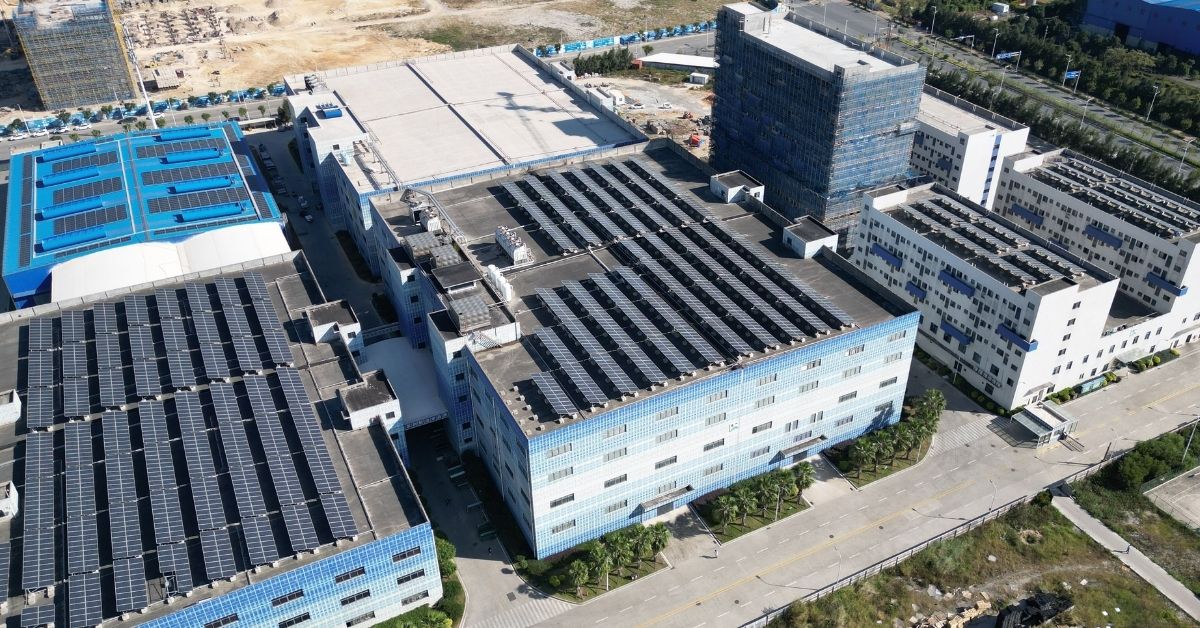
The Australian Government has recently announced an expansion of solar PV eligibility under the Small-scale Renewable Energy Scheme (SRES). From 1 October 2026, subject to regulations being in place, solar PV systems between 100 kW and 1 MW of total onsite capacity will be able to create Small-scale Technology Certificates (STCs). Currently, anything over 100 kW is limited to Large-scale Generation Certificates (LGCs) under the LRET.
If you design, install or quote commercial PV systems, this changes the numbers on every project in that size range.
What the SRES expansion covers for mid-scale solar
At the moment, a system over 100 kW is treated as large-scale. LGCs are created progressively as the system generates. The incentive arrives over years, the certificate price moves, and the owner carries metering and reporting obligations for the life of the registration. There is no upfront value at the point of sale. For plenty of commercial and agricultural energy users, that overhead alone has been enough to stall a project that otherwise stacked up.
From 1 October 2026, mid-scale systems get STCs instead. The certificates are deemed upfront, so the incentive lands at installation. The deeming period is five years, counting up to 31 December 2030 with no annual step-down. Existing accredited large-scale systems stay where they are under the LRET, and nothing changes for systems under 100 kW. The Federal Government puts the estimated savings at around 20% of upfront cost.
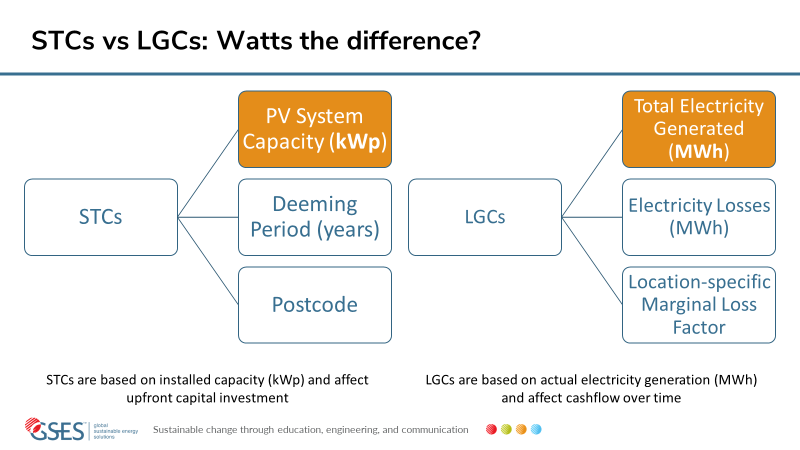
Looking at current spot prices of STCs versus LGCs (as of time of writing) and assuming a few key inputs we can compare the benefit of the two schemes:
INTERACTIVE: SRES expansion mid-scale solar STC versus LGC benefit comparison calculator for systems between 100 kW and 1 MW
There are many assumptions included in this simple comparison. This calculator assumes the spot prices remain constant once this change is put into place. There are also costs that will change over time that may affect overall system cost such as administration and monitoring costs for the LGCs and possible economies of scale with the STCs. The actual impact remains to be seen.
The “Missing Middle”
Federal Energy Minister Chris Bowen has been calling mid-scale solar Australia’s “Missing Middle”, and the label fits. Around one in three Australian homes now has rooftop solar. Meanwhile the shopping centres, cold stores, factories and farms sitting on big daytime loads have lagged well behind, caught between a rebate that capped out at 100 kW and a large-scale scheme whose administrative overheads may not be as appropriate for this segment of the market.
Bowen has also flagged asking the Australian Energy Market Commission to push network providers to approve C&I connections faster, which goes after the other bottleneck these projects tend to hit.
What this means for SAA-accredited installers
One detail in the announcement deserves more attention than it has received. To create STCs, a mid-scale system will need to meet installer and product accreditation requirements under the SRES. In practice that means design and installation by people accredited with Solar Accreditation Australia (SAA), using CEC-approved products.
From October next year, a large share of C&I work moves into SAA-accredited territory under the SRES. The engineering requirements are a step up from small-scale residential systems. On a 600 kW job, fault levels, protection coordination, point of connection decisions, cable sizing and DNSP requirements are all different from residential installations. The hard parts start well before the electrical design. Once a project involves cranes, a live site and container loads of equipment, the procurement, logistics and construction planning become front and center.
The CER has said that design, installation and compliance requirements for mid-scale systems are still under consideration, so more guidance is expected to come before commencement. Installers who get across the fundamentals now will read that guidance with context.
Preparing for the mid-scale solar market
If mid-scale solar design and installation is where your business is headed, the time to build capability is right now. The GSES Commercial & Industrial Solar and BESS Series was built for exactly this class of project. Eight modules, following the full lifecycle of a C&I job from inception through to maintenance. A sample of what’s inside:
- How a C&I project actually runs: lifecycle, risk allocation, QA gates, DNSP approvals, interface protection and metering.
- Procurement decisions residential work never asks of you. OEM-direct versus distributor supply, forex exposure, lead times, and what FOB, CIF and DDP mean for who carries the risk while a container of modules is on the water.
- Construction planning for live commercial sites, from site-specific SWMS and exclusion zones through to lifting equipment and planned shutdowns.
- Engineering coordination beyond the array: carpark and ground-mount structures, wind loads, fire-stopping at penetrations, trenching and DBYD.
- The electrical decisions that define mid-scale design. Point of connection selection, multi-NMI sites and embedded networks, protection coordination, fault levels, voltage rise, harmonics, and the Victorian Emergency Backstop.
- Equipment selection at scale, from string design and MPPT groupings on complex rooftops to BESS siting and VPP-ready, cyber-secure battery communications.
- Cabling for large systems: copper versus aluminium on lifecycle cost, AS/NZS 3008 correction factors, earth grid design, and the termination failure modes that take systems down.
- Commissioning and maintenance, including the operational faults that quietly eat generation. Shading, soiling, CT errors, comms loss.
This course series is recognised for 150 CPD points with Solar Accreditation Australia, so the training counts towards the 100 points you need each year to keep your accreditation current and has additional points to roll over for next year.
This course was developed with funding from the Victorian Government through Solar Victoria.
If you are interested in taking this course and live or work in Victoria, your course fee may be refunded in full when you complete the course, places are limited.
Enrol today and be ready when the market opens.
This article provides general guidance only. The expanded arrangements are subject to regulations being in place, and eligibility criteria for mid-scale systems are still being finalised. Refer to the CER’s announcement and subsequent guidance for confirmed requirements.