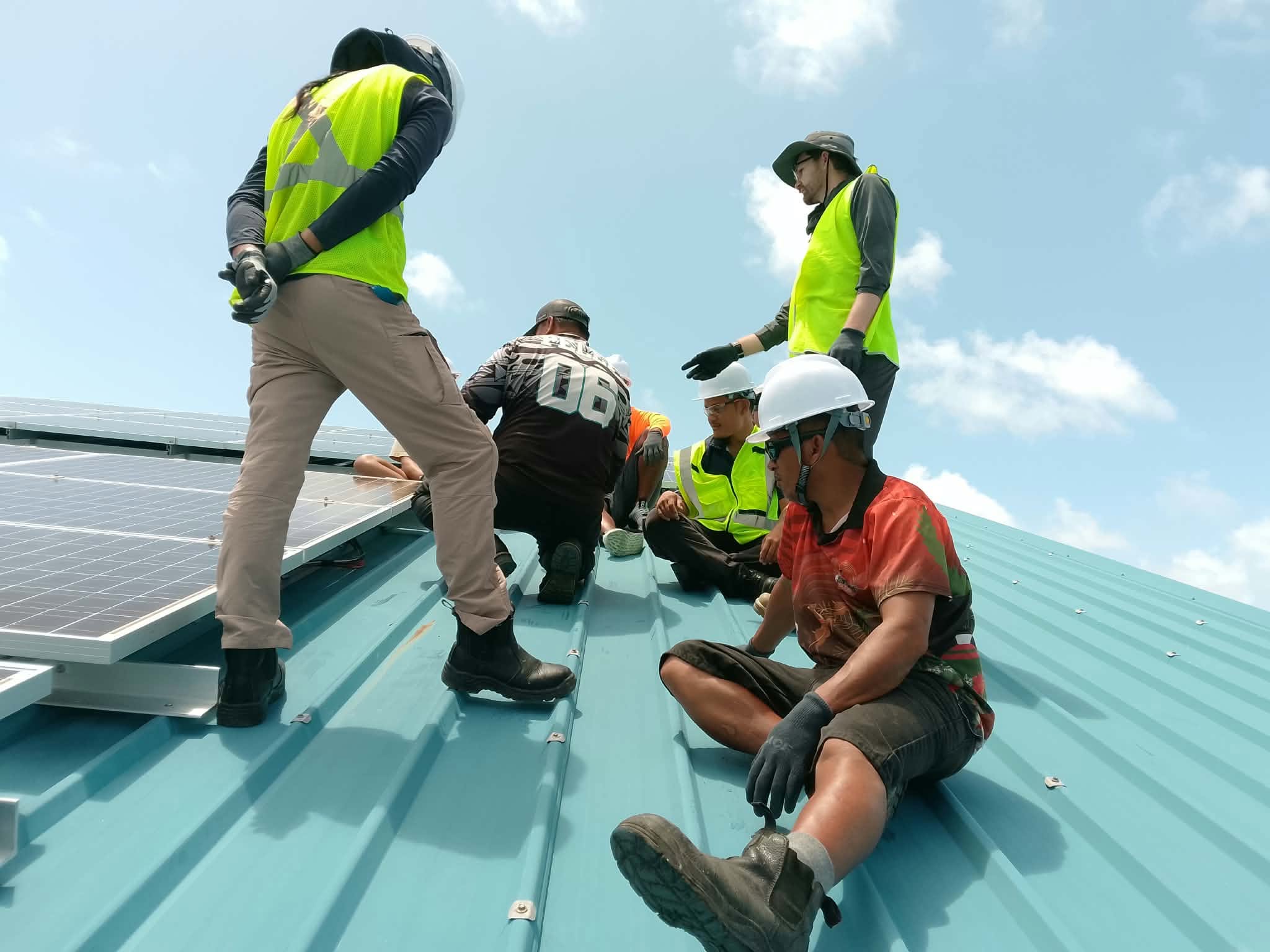
GSES has been delivering Pacific island solar training quite frequently this year, with multiple weeks spent in Tonga, the Solomon Islands, and the Republic of the Marshall Islands. Along with the landmark opening of the training centre in Fiji at the University of the South Pacific and the new mentorship program between Australia and the Pacific, we thought it would be a good time to share some of the learnings from these sessions.
The benefits are massive
Solar can absolutely change lives, bringing power to those that didn’t have it previously. Whenever we talked about bringing new solar into communities everyone wanted a piece and had ideas for how it could fundamentally change the way they live. Renewables allow medical centers to not need redundant generators. They can help to improve the reliability of power when the grid isn’t and fuel prices continue to rise. Many want to learn, even if it is outside of their main industry because they see the potential of energy interdependence and want to make it a reality, a challenge well documented by IRENA’s Pacific Islands renewable energy research. That enthusiasm is exactly why Pacific island solar training delivers as much to the trainer as it does to the learner.
The environment is HARSH
I think we all know that the Australian sun is strong, but the Pacific sun might be even stronger. Unlike Australia the Pacific doesn’t get the luxury of a winter season and so high temperatures and sunlight are nearly constant on the solar panels. That amount of heat for years on end can definitely take a toll and I saw firsthand the results of this on a system 10 years old. The interior of every cell on the array, including the busbars was brown from the intense heat and UV on site.
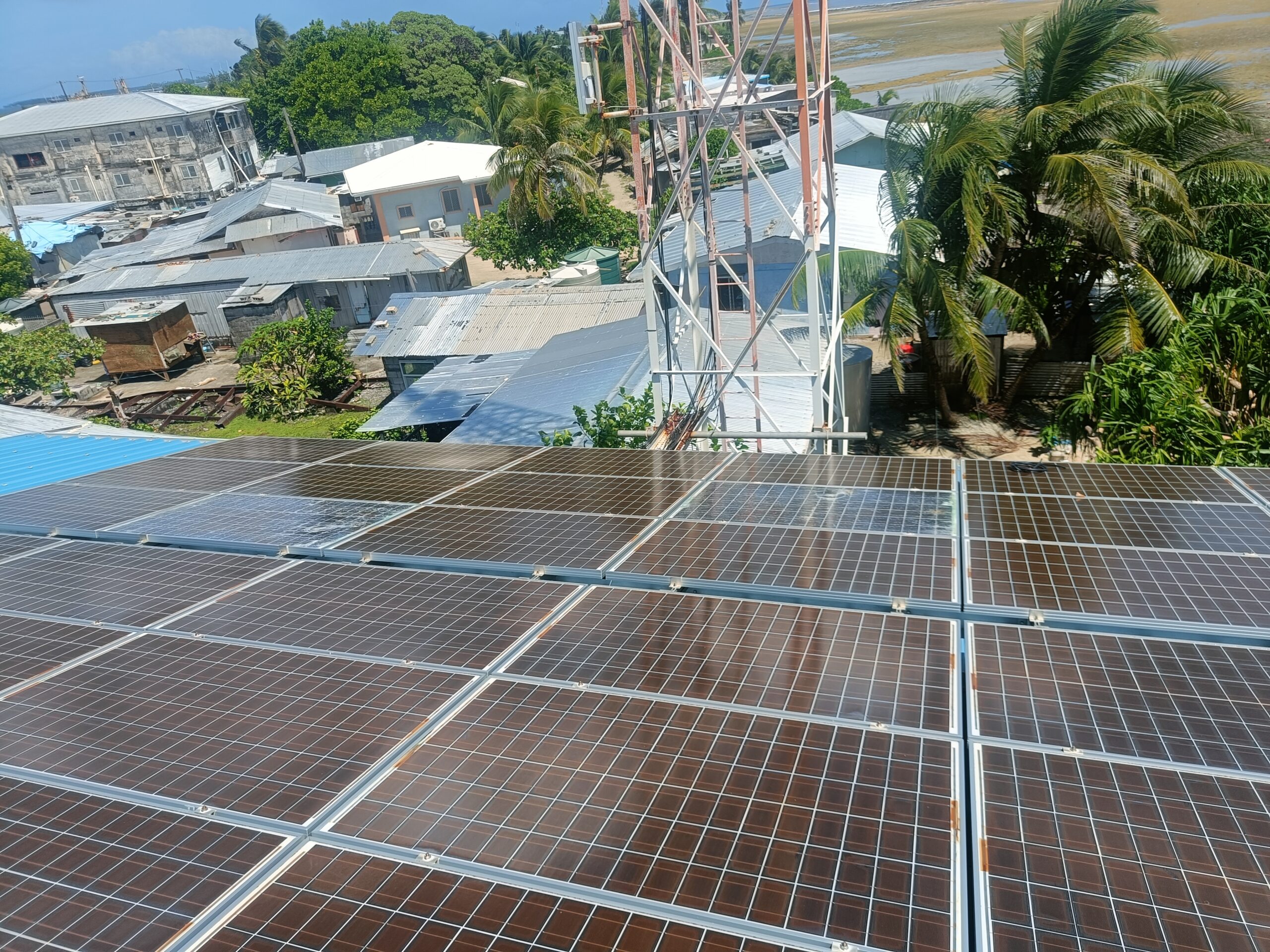
But it isn’t just heat, even more problematic can be the salt and it gets everywhere. Even onto and inside of inverters, which are inside buildings. The salt alone won’t cause corrosion, but the minute it is exposed to some live electricity it will rapidly increase the electrolysis process. When removing some damaged panels some students noticed that the rail immediately beneath the broken panel was starting to decay while the rest of the rail in the array had no outward signs of corrosion. Additionally salty air and components leads to increased conductivity which can cause greater intermittent earth faults, and lead to more frequent arcing in loose connections.
Salt buildup on end clamp | Visual salt in racking materials | Salt buildup on interior inverter |
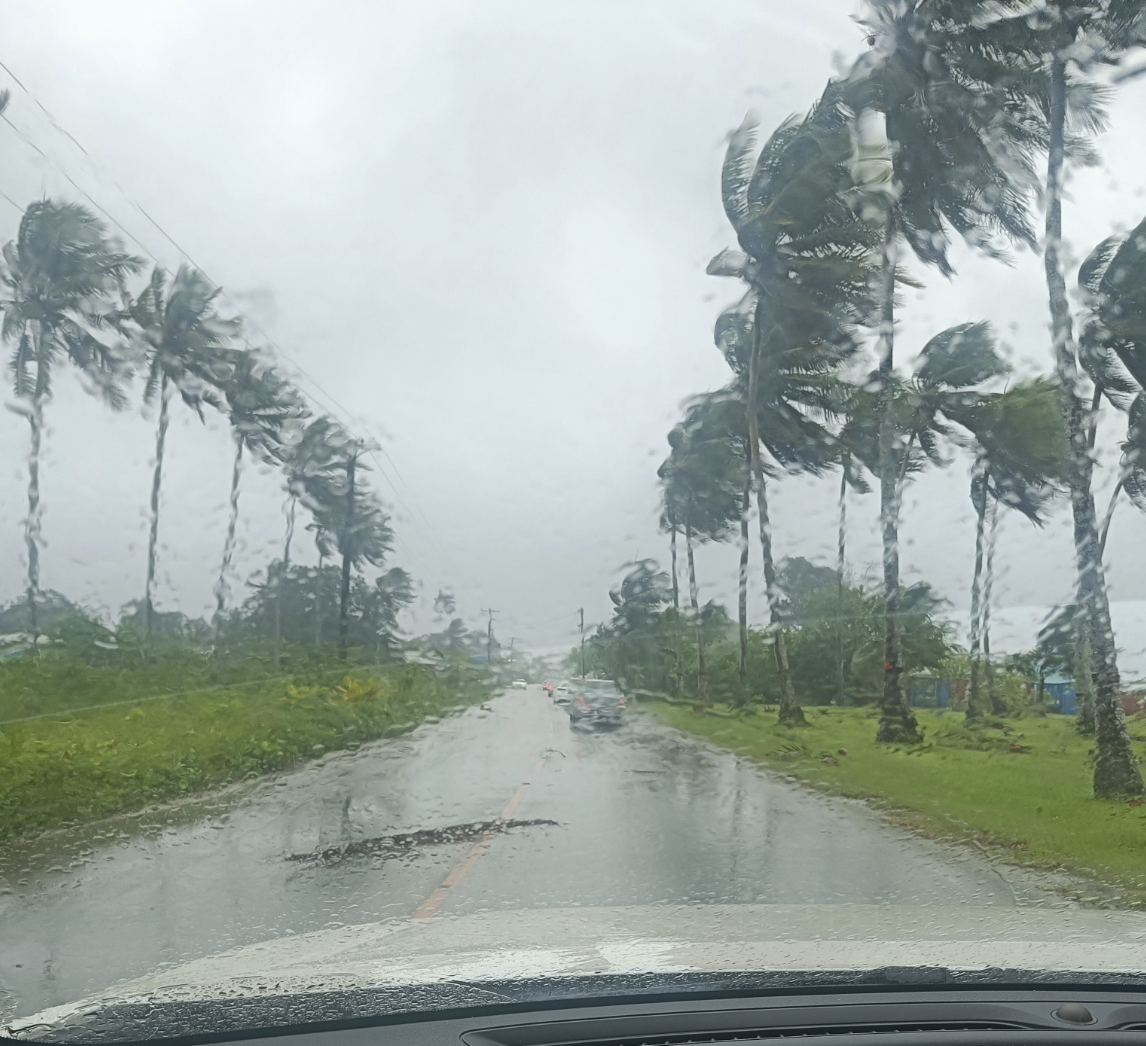
Lastly, the winds also need to be considered as typhoons and cyclones can be frequent. It is important to verify the structure of the building can properly handle solar, and then on top of that that the racking is properly secured to the roof, and cable management is done well.
Proper products for the market
It is essential that due to the harsh environmental conditions, that the proper products are entering these markets. IEC 61701 salt mist corrosion testing has to be considered for all solar panels being installed. Ideally up to severity level 6 which is the maximum length of the testing period, to get the best possible materials which can last to their warranty period.
Additionally IP ratings of components should be ideally 66 or above. Even though dust may not be as much of a problem, salt as well as critters are. And if salt gets into the electrical components of an inverter even the tiniest moisture can cause it to fail. It is even recommended if products are being installed indoors, because there may not be adequate room conditioning or building envelope security. So even though it has a roof over it, the conditions can still be more like an exterior installation.
Maintenance is an absolute must
It’s a shame that capacity building is so limited and sometimes the first item to be cut on large renewable projects. Governments and other non-profits put millions into grand renewable projects on these islands and then 3-5 years later they are just sitting there idle. The knowledge on how to maintain the systems often leaves with the foreign installers which is an extreme disservice to the people.
Some basic steps like cleaning panels ought to be performed at least 6 months, sometimes even more frequently. Otherwise the algae buildup can make it very difficult to clean them later on.
Panels with algae buildup in Niue | Testing current is 0 amps before maintenance |
Some general troubleshooting techniques can go a long way to keep these existing systems online. Simple tests such as voltage and continuity checks to verify if fuses have burnt out or circuit breakers have tripped. Or even just doing a current check to ensure the inverter is off before disconnecting MC4s could save someone’s life. Additionally being able to bypass a panel or two but keep your string lengths the same in parallel and the DC voltage earth fault tests is a skillset all solar technicians on these islands should be equipped with. And lastly the ability to identify the install manual and know what to look for in it is key. Items such as error codes, setup and commissioning steps can all aid in the ability to get these existing systems producing power once more.
This is one of the most consistent findings from GSES’s Pacific island solar training programs: maintenance knowledge leaves with the foreign installer, and the system follows shortly after.
Poor Installation Practices
Another major problem with the longevity of these systems is poor installation practices. In my time on the Marshall Islands I saw systems with only 3 rails for 2 rows of modules which meant that clamping zones were not met. This led to the entire rooftop array being full of cracked panels and earth faults abound.
Solar panels installed outside of clamping zones and appropriate rails. Consequently led to cracking of panels and earth faults | Only zip ties used as cable management which already disintegrated due to environment |
On top of this I have found that cable management is almost non-existent, in part because things like panel clips or stainless steel cable ties aren’t available on the islands. To go along with it, the cabling may not be UV rated and if conduit is used, it isn’t properly sealed leading to leaks and water infiltration.
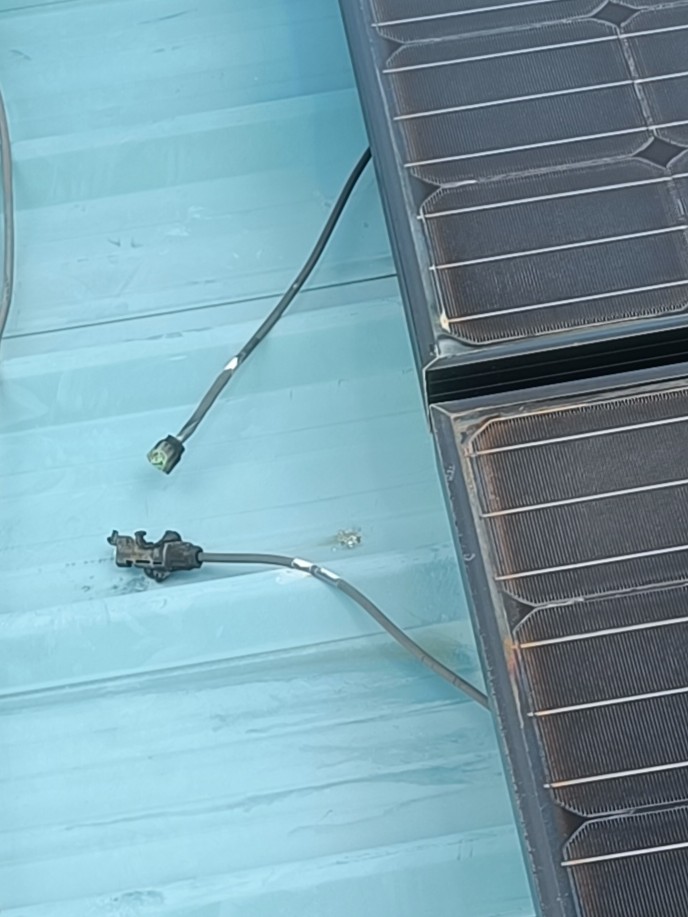
Likewise mismatched MC4 connectors are also common as getting the proper manufacturer mate can be a challenge or an unknown issue. But especially due to that salty air any electrical disconnection will end up arcing and causing issues.
Why Pacific island solar training is the key to long-term system success
The takeaway from all of these things is that training and capacity building is imperative to a sustainable pacific community. Training on which products to bring into the country and can be suitable for the harsh environmental conditions that they will sustain. Training on best installation practices to ensure that the systems can last a long time with fewer faults and issues. Training for maintaining and troubleshooting these systems so they don’t just remain idle and offline, but that fleets are monitored and maintained on a semi-annual basis. And training for the community on what solar and renewable projects can mean for them and how they can be part of the sustainable solution. We at GSES are happy to train on any of these topics because we care and want the best for our pacific island neighbours.
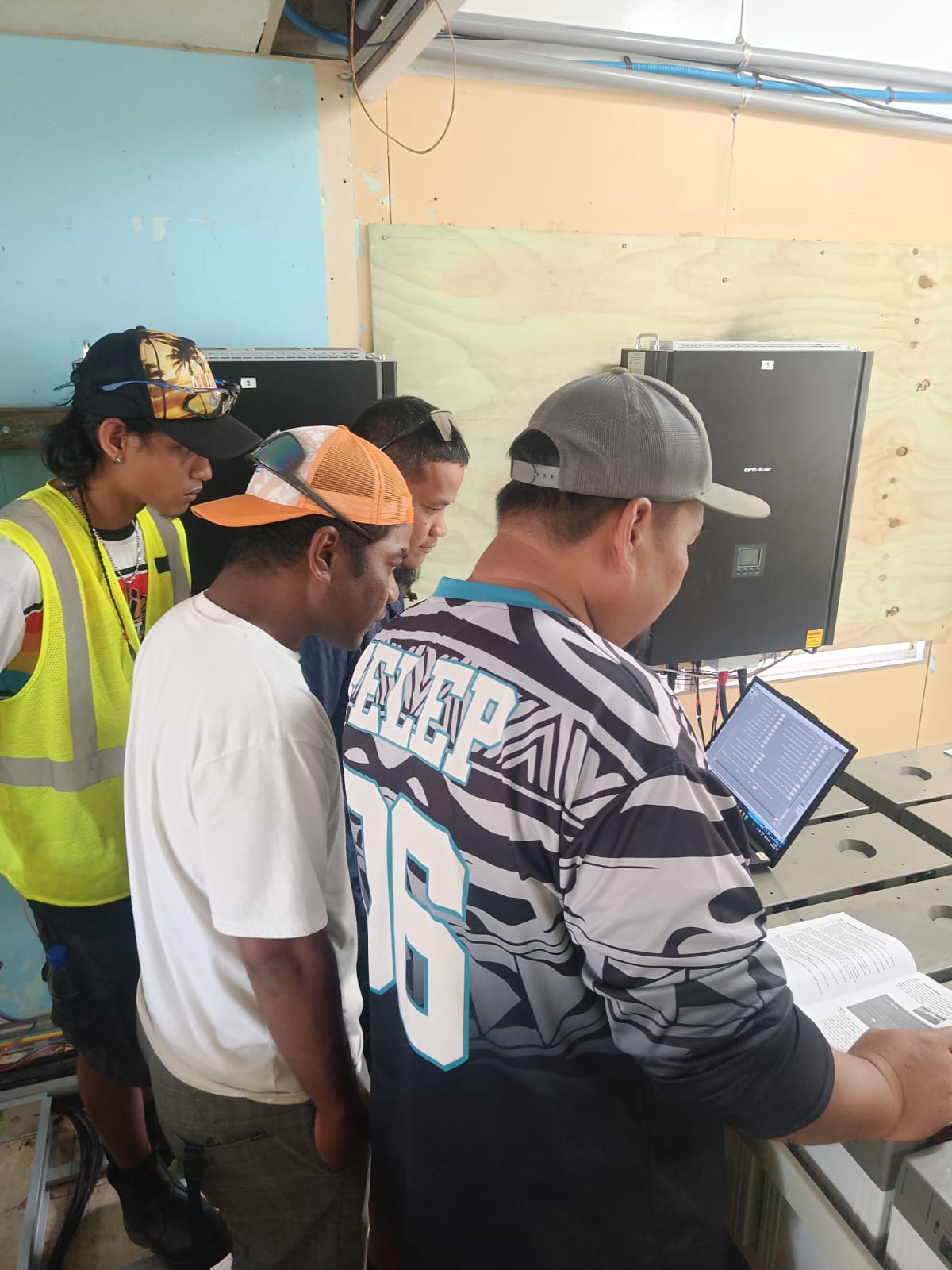
Trainer showing learners DC combiner box | Delivering training in RMI |